

Valves rarely get the attention they deserve. They're not the machine spraying water across your paddock or the pump pushing it through your pipes — but without the right valve in the right place, none of that equipment works the way it should. This guide breaks down the main valve types used in irrigation and filtration systems, what each one actually does, and which one belongs in your setup.
Insert graphic: Simple system diagram showing where valves sit — pump, filter, control valve, sprinkler
Why Valves Matter More Than You'd Think
A valve's job sounds simple: open or close to control the flow of water. In practice, valves are doing several jobs at once in a working irrigation system — regulating pressure so equipment isn't damaged, preventing water flowing backwards where it shouldn't, automating processes that would otherwise need a person standing there, and protecting pumps and filters from running dry or clogging.
Get the wrong valve for the job and you'll see it in reduced pressure, water hammer, premature equipment wear, or a system that simply doesn't do what it's meant to. Get the right one, and it quietly does its job for years without you thinking about it again.
The Main Valve Types — What They Do and Where They Fit
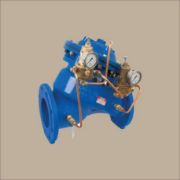
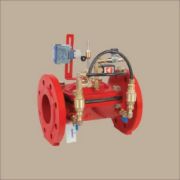
These are the workhorses of larger irrigation and waterworks systems. A hydraulic control valve uses the water pressure already in your system to open, close or regulate itself — no external power required. Inside, a diaphragm moves in response to pressure signals fed through small control tubing, allowing the valve to perform functions like pressure reduction, pressure sustaining, flow control or automatic shut-off, all without anyone touching it.
Many hydraulic control valves use a "Y" body design, which is engineered to resist cavitation and handle high flow rates with minimal head loss — important in systems moving large volumes of water under variable pressure.
Best for: Large-scale irrigation systems, waterworks networks, filtration systems, fire protection, and any setup where automated pressure or flow management is needed.
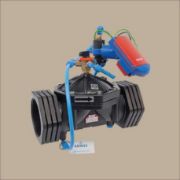
A lighter-duty, more affordable version of the same concept. Plastic hydraulic control valves are direct diaphragm-closing valves that operate using line pressure — the same basic principle as their metal counterparts, but built in a lighter, corrosion-resistant plastic body. The diaphragm and valve body design are engineered to minimise pressure loss while giving smooth, controlled flow.
Best for: Small to medium irrigation systems, applications where corrosion resistance matters, and setups where the extra cost of a metal valve isn't justified.
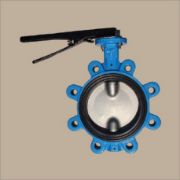
A butterfly valve uses a rotating disc — the "butterfly" — mounted on a shaft through the centre of the pipe. Turn the handle a quarter turn and the disc rotates from fully closed to fully open. They're compact, quick to operate and give a reliable on/off shut-off for a pipeline, without the bulk of some other valve types.
Best for: Isolating sections of pipeline, quick shut-off points, and applications where space is limited.
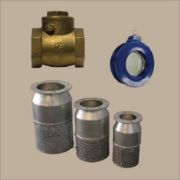
A check valve does one job: it lets water flow in one direction and stops it flowing back the other way. No handle, no manual operation — it opens automatically when water flows the right way and closes automatically the moment flow tries to reverse. This protects pumps from backflow damage and stops water draining back out of a system when it shuts down.
Best for: Pump protection, preventing backflow into a water source, and anywhere reverse flow could cause damage or contamination.
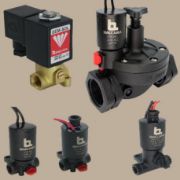
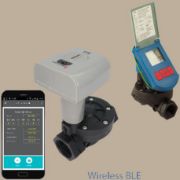
These add electrical automation to the mix. A solenoid — an electrically operated coil — opens or closes the valve (or triggers a hydraulic control valve to do so) in response to an electrical signal, typically from an irrigation controller or automated system. This is what allows a filtration or irrigation system to run on a programmed schedule or sequence without anyone physically present to operate it.
Best for: Automated irrigation scheduling, self-cleaning filtration systems, and any setup controlled by a timer or programmable controller.
A foot valve sits at the bottom of a suction line, submerged in the water source. It combines a check valve function — keeping water in the suction line so the pump doesn't lose its prime — with a strainer that stops debris being drawn into the pump. Without one, a pump can lose suction every time it stops, forcing a re-prime before it can run again.
Best for: Pumps drawing water from a dam, river, tank or bore, especially where the source water carries sediment or debris.
Insert graphic: Visual comparison grid of the 6 valve types with simple icons showing how each operates
Quick Reference — Which Valve for Which Job
| Valve Type | Operation | Typical Application |
|---|---|---|
| Hydraulic Control Valve | Self-actuated via line pressure | Large irrigation & waterworks systems |
| Plastic Hydraulic Control Valve | Self-actuated via line pressure | Small–medium irrigation systems |
| Butterfly Valve | Manual quarter-turn | Pipeline isolation, quick shut-off |
| Check Valve | Automatic, one-directional | Pump and backflow protection |
| Solenoid Controlled Valve | Electrically automated | Scheduled irrigation, self-cleaning filters |
| Foot Valve | Automatic, submerged | Pump priming from dam, river or bore |
Case in Point — Self-Cleaning Filtration Systems
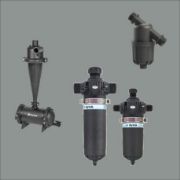
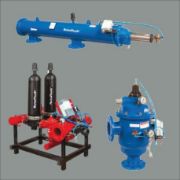
One of the best examples of these valve types working together is a self-cleaning filter system. Hydraulic control valves and solenoid valves work in sequence, automatically triggering a backwash cycle on each filter vessel in turn, then managing the drain and feed lines — all without a single manual switch being flicked.
This is exactly the kind of setup where knowing which valve does what matters. Get the sequencing or valve selection wrong and the system either won't clean properly or will waste water cycling unnecessarily. Get it right, and the whole filtration bank runs itself, protecting your pumps and sprinklers from sediment damage without you thinking about it.
The more automated your system — solenoid valves, controllers, self-cleaning filtration — the more it matters that every valve in the sequence is correctly matched to the others. This isn't always a simple pick-off-the-shelf decision, and it's worth talking it through with someone who understands the full system, not just the individual part.
A valve is a small part of your system with an outsized ability to cause problems if it's the wrong one. The right valve, correctly matched to your pressure, flow and application, is what makes everything else in your system actually work as intended.
How to Choose the Right Valve
- What's the valve actually controlling? On/off isolation, pressure regulation, backflow prevention and automated scheduling all call for different valve types.
- What's your line pressure and flow rate? This determines the valve size and type that will actually perform correctly in your system.
- Does it need to be automated? Manual valves are simpler and cheaper, but automated (hydraulic or solenoid) valves remove the need for someone to be present.
- What's your water source like? Sediment-heavy water sources call for foot valves with strainers and more robust filtration ahead of sensitive valve components.
- Not sure? Call us. Tell us what you're trying to achieve and we'll recommend the right valve — not just whichever one we have on the shelf.
Why Buy Your Valves From IrrigationBox?
We supply a genuine range of irrigation, industrial and hydraulic valves — hydraulic control valves, plastic hydraulic control valves, butterfly valves, check valves, solenoid controlled valves and foot valves — all matched to real Australian irrigation and filtration applications.
- Full valve range in stock — no waiting on distributor orders
- Same-day advice — tell us your application and we'll recommend the right valve
- Factory-direct pricing — best price guaranteed
- Deep product knowledge — we understand how these valves work as part of a complete system, not just as individual parts
- Australia-wide delivery — direct from our Brisbane warehouse to your farm or site
Not Sure Which Valve You Need?
Tell us what you're trying to control, your pressure and your flow rate — we'll recommend the right valve for your system.
Browse the Full Valve Range →